

How did crypto in Africa reach $205B on-chain? This article traces the continent’s journey from Bitcoin’s earliest days to today.
In November 2013, Elizabeth Rossiello received $50,000 from an angel investor. She then hired a development team in Germany and brought in a UX team in Nairobi. Together, they built a prototype for a Bitcoin-based remittance service focused on East Africa.
However, the timing was far from ideal. Bitcoin had only recently crossed the $1,000 mark for the first time. At the same time, Africa had very little supporting infrastructure for the technology. In addition, the regulatory environment was still unclear. Most importantly, many of the people the service aimed to help had never used a bank account.
Nevertheless, Rossiello launched the company as BitPesa. In its first month, the platform processed $5,000 in transactions. The idea was simple. Instead of paying Western Union’s 8–12% fees to send money from the UK to a Kenyan mobile wallet, customers could use BitPesa. First, the sender converted British pounds into Bitcoin. Next, BitPesa converted the Bitcoin into Kenyan shillings. As a result, the transfer settled within minutes and cost only a fraction of traditional remittance fees.
At first, few people paid attention. Bitcoin was still seen mainly as a technology for Western innovators and darknet markets. As a result, Africa barely featured in the global conversation.
Twelve Years Later
However, the situation changed dramatically over the next twelve years. According to Chainalysis data, Sub-Saharan Africa received more than $205 billion in on-chain cryptocurrency value between July 2024 and June 2025. This represented a 52% increase over the previous year, making the region the third-fastest-growing crypto market in the world. Nigeria alone accounted for $92.1 billion, nearly triple the volume of second-place South Africa. The continent that global finance largely ignored for most of its history built one of the most compelling crypto adoption stories on earth because the technology solved real financial problems that traditional financial systems had failed to address.
This article traces that history from the beginning. It examines how cryptocurrency adoption started, what drove its growth, who built the ecosystem, and what the latest data suggests about its future.
Before Crypto in Africa: The System That Left Millions Behind
To understand why crypto took hold in Africa, you first need to understand the financial system it was competing with. More importantly, you need to understand the financial system that was absent for much of the continent’s population.
Limited Access to Banking
Historically, Sub-Saharan Africa has had some of the lowest levels of formal banking access in the world. In the early 2010s, fewer than 25% of adults in most Sub-Saharan African countries held a formal bank account. In countries such as Niger, Chad, and the Central African Republic, that figure was even lower, at around 5 to 10%.
However, poverty was only part of the story. Bank branches were concentrated in urban centers. Account opening requirements included documents that many rural residents did not have. In addition, transaction fees that were reasonable for large balances were often too expensive for people with smaller amounts of money. As a result, the banking system was designed, whether intentionally or not, for people who already had money.
Expensive Cross-Border Payments
Cross-border payments were another major challenge. Africa has 54 countries and 41 official currencies. As a result, sending money between neighboring countries often meant converting funds through US dollars or euros. Each conversion added fees. Settlement could take days. In addition, many African banks had limited correspondent banking relationships, making cross-border transfers even more difficult.
Remittances, or money sent home by diaspora workers in Europe, the United States, and the Gulf, were even more expensive. The World Bank consistently ranked Sub-Saharan Africa as the world’s most expensive region for remittances. On average, sending $200 cost between 8 and 9% in fees. That was nearly three times the United Nations’ target of 3%.
Inflation and Currency Instability
Inflation created another challenge. Several African currencies had long histories of devaluation, shaping how many people viewed money and savings. Zimbabwe’s hyperinflation in the late 2000s produced the now-famous $100 trillion note, which was worth only about $40. However, Zimbabwe was an extreme case. Less dramatic versions of the same pattern appeared across the continent. Governments printed money to finance budget deficits. Foreign exchange reserves declined. Confidence in central banks weakened. Ghana, Nigeria, Ethiopia, Egypt, and several other countries experienced long periods of double-digit inflation that steadily eroded the value of savings held in local currencies.
Against this backdrop, cryptocurrency offered something different. Anyone with a mobile phone and an internet connection could hold, send, and receive value across borders. They did not need a bank account, a correspondent banking relationship, or permission to move money internationally.
The technology matched problems that already existed. That is one reason crypto found an audience in Africa so quickly.
M-Pesa and the Mobile Money Foundation (2007 to 2013)
Before Bitcoin arrived in Africa, Kenya had already run the experiment that proved digital financial services could work for populations with no bank accounts. It also showed that mobile phones could serve as the delivery mechanism.
M-Pesa, launched by Safaricom in March 2007, allowed Kenyans to deposit, withdraw, and transfer money using basic feature phones through SMS. No smartphone or bank account was required. Just a SIM card and a national ID. By 2010, M-Pesa had more than 13 million users, roughly half of Kenya’s adult population, and was processing more transactions per day than Western Union globally. By 2025, M-Pesa handled KSh 38.3 trillion during the financial year ending in March. That figure exceeded Kenya’s annual GDP.
M-Pesa changed how millions of Kenyans thought about money. People learned to trust a phone as a financial tool, send money to someone they could not see, and store value digitally instead of in cash. When Bitcoin and other cryptocurrencies arrived, the conceptual leap required for adoption was much smaller in Kenya than it would have been in a country without M-Pesa.
A similar pattern emerged across the continent, although each market developed differently. MTN Mobile Money in Ghana and Nigeria, Airtel Money across East and West Africa, and Orange Money in Francophone West Africa all helped build populations that were already comfortable with digital financial transactions before Bitcoin became widely known.
When BitPesa launched in 2013 and integrated directly with M-Pesa wallets for settlement, it was not introducing a foreign technology to an unfamiliar audience. Instead, it connected a global settlement layer to infrastructure that millions of people were already using every day.
The First Wave: 2013 and the Year Africa’s Crypto Infrastructure Was Born
2013 was the year Africa’s crypto industry was effectively founded. Three separate developments, all within the same twelve-month period, changed what crypto could do in Africa.
Luno Launches in Cape Town
Marcus Swanepoel worked as a South African chartered accountant after roles at Morgan Stanley in London and Standard Chartered in Singapore. At those institutions, he saw the inefficiency of cross-border payments, the exclusivity of the financial system, and the gap between what global finance promised and what it delivered to most people on the African continent. Those experiences convinced him there was an opportunity to build something different.
In 2013, he co-founded Luno with Timothy Stranex, Pieter Heyns, and Carel van Wyk. The founders launched the company as BitX before later renaming it Luno. They launched the platform in Cape Town with a mobile-first design, local currency integration, and compliance systems that allowed the company to operate in markets where crypto regulation continued to evolve. In 2015, Naspers, Africa’s largest company by market capitalization at the time, led Luno’s $4 million Series A. The investment showed that the continent’s largest technology investor believed the company had long-term potential.
Luno became Africa’s first cryptocurrency exchange. The platform introduced Bitcoin to millions of South Africans who had never owned a cryptocurrency and had no existing route into global digital assets. By 2021, it had 9 million users across more than 40 countries. By 2023, Swanepoel had become executive chairman while Luno continued expanding across Nigeria, Ghana, and East Africa.
BitPesa Launches in Nairobi
In the same year, across the continent in Nairobi, Elizabeth Rossiello was building BitPesa. While Luno built an exchange where people could buy and hold cryptocurrency, BitPesa built a payment network that focused on remittances between the UK diaspora and East African mobile money wallets.
The founding insight was precise. Rossiello identified that the biggest financial challenge for the African diaspora in the UK was not access to banking because most already had bank accounts. Instead, it was the high cost and slow speed of sending money home. Bitcoin provided a settlement layer that bypassed the correspondent banking system. BitPesa handled the currency conversion at both ends, allowing users to send money in a way that felt like a direct transfer at a fraction of the cost.
BitPesa started by processing $5,000 a month in Kenya. It expanded into Uganda and Tanzania in 2015. By the time the company rebranded as AZA Finance in 2019, it was processing $65 million a month across 11 African countries. It had also secured authorization from the UK’s Financial Conduct Authority (FCA) and raised capital from Pantera Capital, Blockchain Capital, and Digital Currency Group. Over the same period, it evolved from a Bitcoin remittance startup into one of Africa’s largest B2B currency conversion and payment platforms.
The Ice3X Launch and South Africa’s Early Ecosystem
Also in 2013, Ice3X launched in South Africa as another early exchange serving the local market. South Africa’s relatively developed financial infrastructure, higher smartphone penetration, and early regulatory engagement made it a natural early adopter. By 2017, South Africa had one of the highest Bitcoin penetration rates outside North America and Western Europe, with nearly 11% of internet users having purchased crypto. That level of adoption was comparable to some European markets.
Together, Luno in Cape Town, BitPesa in Nairobi, and Ice3X marked the beginning of Africa’s original crypto infrastructure layer. They built their businesses with almost no regulatory guidance, in a market that most global investors ignored, and for users that global financial services had largely written off. Even so, they kept building.
Zimbabwe, Inflation, and the First Large-Scale Test Case (2015 to 2017)
Bitcoin had long been promoted as a hedge against inflation in whitepapers and online discussions. Africa provided the first large-scale opportunity to see whether that idea held up.
Zimbabwe’s economy had gone through the most extreme inflation event in modern history between 2007 and 2009, culminating in the abandonment of the Zimbabwean dollar in 2009 in favor of a multi-currency system dominated by US dollars and South African rand. By 2015, however, the country’s economic problems had returned. The government introduced bond notes, which traded at a discount to the US dollar on unofficial markets. Foreign currency was scarce. Banks restricted cash withdrawals. Zimbabweans who had lived through hyperinflation once were watching the warning signs appear again.
Bitcoin adoption in Zimbabwe during this period reflected the need to hold value outside a system that had already failed once. Golix, a Zimbabwean exchange previously called BitcoinFundi, saw Bitcoin trading at premiums to global prices, sometimes 30 to 40% above the market rate, because local buyers were willing to pay more for a store of value that the government could not print or confiscate.
Zimbabwe showed something that years of analysis alone could not demonstrate as clearly. In countries where the currency itself had become the primary risk, Bitcoin became a financial necessity for many people. Those who paid a 40% premium wanted greater certainty in an uncertain environment.
This way of understanding crypto became central to the story of Crypto in Africa. Across the continent, adoption grew because the technology addressed financial problems that millions of people faced every day.

Nigeria Enters the Picture: Peer-to-Peer Trading and the Naira Problem (2017 to 2020)
Nigeria’s entry into the crypto story happened gradually and then very quickly.
The gradual part was demographic. Nigeria has over 220 million people, a median age under 20, one of the largest diaspora populations in the world, and a tech ecosystem in Lagos that has been building digital products since the early 2010s. Much of the country’s young population was online, mobile-first, and increasingly frustrated with a banking system that struggled to provide reliable access to foreign currency for business payments, freelance earnings, and international commerce.
The naira had been under persistent pressure since the oil price collapse of 2014. The Central Bank of Nigeria (CBN) maintained an official exchange rate that diverged from parallel market rates, creating a two-tier currency system that made accessing US dollars through official channels expensive, slow, and often impossible for ordinary transactions. Freelancers working for clients in the UK or the United States, businesses importing goods from China, and people trying to protect their savings from inflation found few workable options within the traditional financial system.
The Rise of Peer-to-Peer Trading
LocalBitcoins‘ peer-to-peer trading volumes in Nigeria grew rapidly from 2017 onward as Nigerians discovered they could buy USDT or Bitcoin directly from other Nigerians without going through the official banking system. The peer-to-peer model mattered because it removed the naira-to-dollar conversion step that the CBN controlled. Two Nigerians could transact with each other in crypto without using the official foreign exchange system.
Nigerian exchanges began launching to serve this demand. Quidax, BuyCoins, Patricia, and Busha entered the market between 2017 and 2020, each building platforms with local currency integration and mobile apps designed around how Nigerians used crypto. Stablecoins became a popular way to preserve value and make payments, while Bitcoin served as a longer-term store of value.
By 2020, Nigeria had become Africa’s largest crypto market and one of the world’s busiest peer-to-peer Bitcoin trading markets. The country’s growth reflected the continuing pressure on the naira and the demand for alternatives that gave people greater control over their money.
The Regulatory Turbulence: CBN, Binance, and the Cost of Confusion (2021 to 2024)
Africa’s regulatory history with crypto is not a clean story of progressive liberalization. It is a story of countries oscillating between restriction and accommodation as they tried to manage the tension between an innovation they could not stop and risks they legitimately needed to address.
Nigeria’s experience was the most dramatic. In February 2021, the Central Bank of Nigeria issued a circular directing all banks and financial institutions to close the accounts of customers and entities transacting in cryptocurrencies. The directive effectively made it impossible for licensed crypto exchanges to offer naira on-ramps and off-ramps through the banking system. LocalBitcoins volumes immediately spiked. Nigerians moved to peer-to-peer trading to get around the banking restriction, which is exactly what regulators should have anticipated.
The CBN’s concern was not irrational. Nigerians holding USDT instead of naira reduced demand for the local currency and complicated monetary policy. Capital controls designed to protect foreign exchange reserves were being bypassed at scale. The problem was that the directive addressed the symptom rather than the cause. Nigerians were moving into stablecoins because the naira was losing value and the official system offered no alternative. Restricting that option did not fix the underlying problem. It only made access more expensive.
Crypto in Africa Faces a Regulatory Test
In 2024, the situation escalated. Binance, which had become the dominant exchange for Nigerian crypto traders, was accused by the Nigerian government of facilitating capital flight through the naira/USDT trading pair. The government detained two Binance executives who had traveled to Abuja for regulatory discussions. One, Tigran Gambaryan, remained in detention for months before being released in October 2024 on humanitarian grounds after international pressure. Nigeria ultimately banned naira trading pairs on Binance. The decision pushed trading toward alternative platforms and peer-to-peer markets instead of reducing overall activity.
The Binance episode illustrated a tension that every African government was navigating in different ways. Crypto had become too large and too embedded in everyday financial life to regulate out of existence. However, the tools governments relied on, including capital controls, banking restrictions, and exchange oversight, were designed for a financial system with clear institutional intermediaries. Peer-to-peer networks could operate outside those traditional points of control.
South Africa took a different approach. Rather than restricting crypto, the Financial Sector Conduct Authority (FSCA) classified cryptocurrencies as financial products in 2022 and brought them under its existing regulatory framework. By March 2024, South Africa had approved 59 crypto operating licenses. That regulatory certainty attracted institutional participation that more restrictive markets could not match. As a result, South Africa’s crypto market developed a different profile from Nigeria’s, with higher average transaction sizes, more sophisticated trading strategies, and greater institutional participation.
Crypto in Africa: The Stablecoin Era (2022 to 2025)
If the first decade of crypto in Africa was largely a Bitcoin story, the second decade belongs to stablecoins.
Stablecoins now account for approximately 43% of all crypto transaction volume in Sub-Saharan Africa, according to Chainalysis. In Nigeria, they represent roughly 40% of all stablecoin inflows across the region. In the first quarter of 2024, stablecoin transaction value in Nigeria approached $3 billion in transactions under $1 million. It was the first time stablecoins had surpassed Bitcoin and altcoins combined as the preferred medium for small to medium-sized transactions.
The reason becomes clear once you understand what many African crypto users are trying to accomplish. Most are looking for reliable access to US dollars. USDT and USDC give them a dollar-denominated asset that they can hold on their phones, send to anyone in the world within seconds, and convert back into local currency whenever they need to. The fact that these assets are cryptocurrencies is secondary to their purpose. What matters is that they provide access to dollars without requiring a US bank account.
A February 2026 survey by YouGov found that 95% of Nigerian respondents would prefer to receive payments in stablecoins rather than in the local currency. The result reflected how many Nigerians viewed the naira and why stablecoins had become part of everyday financial life.
43%
SHARE OF SUB-SAHARAN AFRICA’S CRYPTO TRANSACTION VOLUME ACCOUNTED FOR BY STABLECOINS – CHAINALYSIS 2025
The dominance of stablecoins in Africa’s crypto market is not incidental. It reflects the specific financial problem most African crypto users are trying to solve: access to a stable, dollar-denominated asset that can be held, sent, and received without a US bank account or exposure to local currency volatility.
The stablecoin story also intersects with remittances in ways that are becoming increasingly visible in the data. Sub-Saharan Africa received $56 billion in remittances in 2024 while paying average transfer fees of 8.78% on a $200 transfer. That was nearly three times the UN’s 3% target and the highest average fee of any region in the world. A Mercy Corps Ventures pilot program in Kenya tested stablecoin-based micropayments for freelancers receiving payments from abroad. The program found that fees fell from 29% to 2%, while settlement times dropped from days to minutes. Freelancers without bank accounts could access their earnings directly. The pilot was small, but its findings pointed to a much larger opportunity.
The Data in Full: Who Is Leading and What the Numbers Show
Nigeria
Nigeria’s position at the top of Africa’s crypto market is clear. Between July 2024 and June 2025, the country received $92.1 billion in on-chain cryptocurrency value. That was nearly three times the volume recorded by second-place South Africa, placing Nigeria sixth globally and second on Chainalysis’s grassroots adoption index. Peer-to-peer monthly trading volumes exceeded $2.4 billion by early 2026.
According to Chainalysis, Bitcoin accounted for 89% of fiat crypto purchases in Nigeria. That level of Bitcoin adoption exceeded most other markets and reflected its role as a store of value in a high-inflation environment. The March 2025 naira devaluation pushed monthly on-chain volume to nearly $25 billion. While volumes fell across many global markets during the same period, activity in Nigeria moved in the opposite direction. The relationship between currency instability and crypto usage appears consistently throughout Nigeria’s on-chain data.
Nigeria’s Investment and Securities Act 2025 formally classified digital assets as securities under the Securities and Exchange Commission, giving licensed platforms their clearest operating framework to date. Busha Digital and Quidax became the first officially recognized crypto operators under the SEC’s Accelerated Regulatory Incubation Program (ARIP). The country’s regulatory direction has moved toward greater accommodation, although the pace of implementation remains uncertain.
$92.1B
NIGERIA ON-CHAIN VALUE RECEIVED—JULY 2024 TO JUNE 2025
$2.4B
NIGERIA PEER-TO-PEER MONTHLY TRADING VOLUME—EARLY 2026
South Africa
The latest data on crypto in Africa shows that South Africa has developed a market with characteristics that differ from Nigeria’s in almost every measurable way. While Nigeria’s adoption has been driven largely by retail users seeking inflation protection and access to US dollars, South Africa records a much higher share of large institutional transactions. Monthly trading volumes approach $1.8 billion, supported by regulatory certainty from the FSCA that has made professional market participation viable.
South Africa has one of the highest Bitcoin penetration rates outside North America and Western Europe. With 59 licensed crypto service providers and a regulatory framework that has attracted institutional participants from global markets, South Africa has become the continent’s most institutionalized crypto market. Its market resembles established financial centers more closely than the grassroots retail adoption that drives Nigeria’s growth.
Ripple partnered with Absa Bank in 2026 to extend custody services across the region, using South Africa as its entry point. The partnership reflected growing confidence among global crypto infrastructure companies in South Africa’s regulatory environment as a gateway to institutional activity across the continent.
Kenya
Kenya’s crypto story builds directly on M-Pesa’s legacy. By 2021, 79% of adults held some form of financial account, largely through mobile money, giving Kenya the highest financial inclusion rate in Sub-Saharan Africa before crypto arrived. Monthly crypto trading volumes exceed $1 billion, with M-Pesa integration providing the on-ramp and off-ramp infrastructure that makes Kenya’s market more accessible than most.
Kenya’s parliament passed the Virtual Asset Service Providers (VASP) Bill in October 2025, establishing a dual oversight framework under the Central Bank of Kenya and the Capital Markets Authority. A nationwide consultation on detailed regulations was underway in 2026. Luno, which had launched in Kenya in 2013 under the name BitX before exiting in 2014 amid regulatory uncertainty, re-entered the market in 2025. The return reflected a regulatory environment that had become more supportive of licensed crypto businesses.
Ghana and Ethiopia
Ghana passed its Virtual Asset Service Providers Bill in December 2025, formally legalizing cryptocurrency trading under Bank of Ghana oversight and bringing an estimated $3 billion in annual informal crypto activity into the regulated market. With more than 30% of Ghana’s population still lacking access to formal financial services, the new framework created opportunities for digital financial services to reach communities that the banking system had not.
Ethiopia’s appearance among Africa’s five largest crypto markets by volume is one of the more surprising findings in the Chainalysis regional analysis. Ethiopia has less developed financial infrastructure than Nigeria, Kenya, or South Africa, making its trading volume notable because it reflects adoption driven by everyday financial needs. Ethiopia rounds out the top five alongside Nigeria, South Africa, Kenya, and Ghana.
Crypto in Africa: The Infrastructure Behind Adoption
As crypto in Africa expanded, companies began building services that extended beyond buying and selling digital assets. Payment networks, settlement systems, and consumer financial services became the next phase of the industry’s development.
Yellow Card, founded in 2019, has become one of Africa’s largest crypto-to-fiat platforms. It operates in 20 African countries and processes hundreds of millions of dollars in monthly volume. CEO Chris Maurice has described Yellow Card’s mission as building the payment infrastructure that banks never built. The company aims to create a settlement network across Africa’s 41 currencies. It also seeks to reduce the cost of the existing correspondent banking system.
Busha is now a licensed operator under Nigeria’s Securities and Exchange Commission. The company has expanded beyond cryptocurrency buying and selling. Users can now pay bills, top up mobile phone credit, and make retail purchases. COO Moyo Sodipo described how public perceptions have changed: “People are starting to see the utility of cryptocurrency, especially in day-to-day transactions.” That observation aligns with the on-chain data. Sub-Saharan Africa records a higher share of transactions under $10,000 than any other region in the world. The figures point to widespread everyday use alongside investment activity.
Ripple’s RLUSD stablecoin has been deployed for aid delivery and remittances through partnerships with financial institutions across the continent. Trident Digital announced a $500 million XRP treasury dedicated to African cross-border payments. Mobile money already accounts for about 70% of the world’s $1 trillion market. That gives Crypto in Africa an existing digital payments network to build on rather than creating one from scratch.
$205B
SUB-SAHARAN AFRICA ON-CHAIN VALUE RECEIVED – JULY 2024 TO JUNE 2025, CHAINALYSIS
A 52% year-over-year increase, making Sub-Saharan Africa the third-fastest-growing crypto market in the world behind Asia-Pacific and Latin America. The region accounts for 2.7% of global crypto transaction volume, a figure that understates its significance, given that Sub-Saharan Africa’s GDP represents a similarly small fraction of global output while its adoption rate is among the highest on earth.
Crypto in Africa: The Central African Republic and Bitcoin as Legal Tender
In April 2022, lawmakers in the Central African Republic (CAR) voted unanimously to adopt Bitcoin as legal tender. It became the second country in the world to do so after El Salvador. The CAR is one of the world’s poorest and most economically fragile countries, with a population of about 5 million and limited banking infrastructure. The government said the move would promote financial inclusion and support economic development.
The experiment did not unfold as planned. Bitcoin’s price volatility limited its usefulness as an everyday currency in a country where most transactions are small and stable prices are important. By 2023, the government had largely stepped back from the legal tender framework without formally repealing it. The experience highlighted the difference between Bitcoin as a store of value and Bitcoin as a medium of exchange. Similar challenges had also appeared in El Salvador, although in a larger and more developed economy.
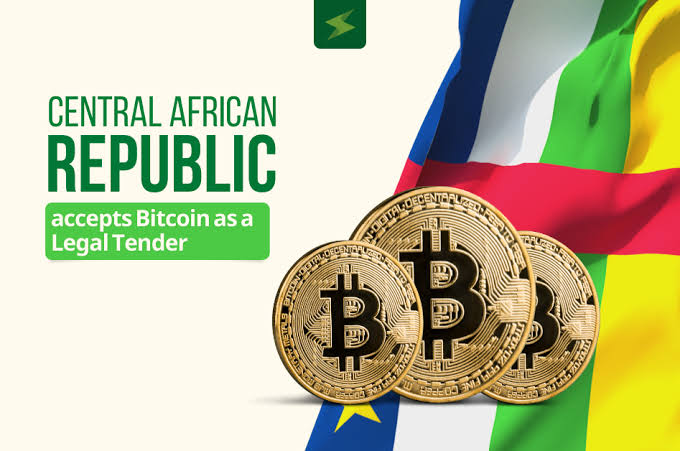
The Central African Republic remains an important part of the history of crypto in Africa because it tested Bitcoin at the national level. The results showed that adopting Bitcoin as legal tender alone was not enough to achieve the government’s goals. Infrastructure, price stability, and public adoption all proved just as important as the technology itself.
Crypto in Africa: What the Skeptics Get Right
The growth of Crypto in Africa is well supported by the data. At the same time, the challenges deserve equal attention.
Price volatility remains one of the biggest concerns. Users who hold Bitcoin or Ether as a store of value can see prices rise or fall by 20 to 30% within a few weeks. Those swings can create serious financial pressure for people who need to convert their holdings back into local currency to pay everyday expenses. Stablecoins reduce part of that risk, but they introduce others, including issuer risk, regulatory uncertainty, and the possibility that a peg could fail.
Fraud also remains a major challenge. Africa’s crypto market has attracted investment schemes, fake exchanges, and social engineering scams that have cost users billions of dollars. The same regulatory gaps that make crypto easier to access can also make fraud easier to carry out. Improving consumer protection without limiting open access remains one of the industry’s biggest challenges.
Infrastructure continues to limit adoption in many parts of the continent. Smartphone ownership and internet access have expanded across Sub-Saharan Africa, but both remain out of reach for many people. Those who could benefit most from crypto often face the greatest barriers to accessing it. Expanding reliable internet access and digital infrastructure will require more than blockchain technology alone.
Regulation also remains uneven. South Africa has established a clearer framework, while Kenya and Ghana continue to develop theirs. Nigeria’s approach has changed several times in recent years. Across much of the continent, crypto businesses still operate under rules that continue to evolve. That uncertainty can discourage long-term investment in the infrastructure needed to support wider adoption.
Crypto in Africa: What Comes Next
The story of Crypto in Africa is still unfolding. Adoption has reached a scale that is difficult to ignore, but many of the systems needed to support the next phase of growth are still under development.
One area to watch is stablecoin settlement infrastructure. Stablecoins have already overtaken Bitcoin as the primary use case for crypto in Africa. The next challenge is expanding local currency on-ramps and off-ramps that allow a Nigerian freelancer, for example, to receive USDT from a client in the United Kingdom and settle it into a naira bank account within minutes at low cost. Yellow Card, Busha, Breet, and other companies are working toward that goal. If those services become widely available, transaction volumes could grow well beyond today’s levels.
Regulation will also affect the pace of adoption across the continent. Africa’s 54 countries continue to follow different approaches to crypto oversight. South Africa has introduced a licensing framework, while Kenya and Ghana are developing their own rules. Other countries remain more restrictive. The African Continental Free Trade Area (AfCFTA) provides a forum for discussing more consistent rules for digital financial services. Greater regulatory alignment among the continent’s largest markets could make it easier to build services that operate across borders.
Decentralized finance is another area worth watching. Sub-Saharan Africa already ranks among the world’s leading regions for DeFi adoption relative to market size. Nigeria alone received more than $30 billion in DeFi protocol value during the last reporting period. As mobile access improves and transaction costs fall, DeFi services may become more practical for everyday users across the continent.
The Long-Term Outlook for Crypto in Africa
Elizabeth Rossiello started with $50,000 and about $5,000 in monthly transactions in 2013. Twelve years later, Africa received $205 billion in on-chain value over a single twelve-month period. That growth did not happen because crypto arrived before the need existed. It happened because millions of people already faced costly payments, unstable currencies, and limited access to financial services. Those challenges remain, and solving them will determine how far crypto in Africa can grow.
Key takeaways from this article:
Practical financial needs drive crypto adoption in Africa. Inflation, currency depreciation, costly remittances, and limited banking access created real demand for faster, cheaper, and more accessible financial alternatives.
2013 marked the beginning of Africa’s crypto ecosystem. The launches of Luno, BitPesa, and Ice3X laid the foundation for the continent’s digital asset industry, despite minimal regulatory guidance and limited global attention.
M-Pesa paved the way for crypto adoption. Years of mobile money usage familiarized millions of Africans with digital wallets and phone-based payments, making the transition to cryptocurrencies far more intuitive.
Stablecoins have become the dominant use case in crypto. They account for 43% of Sub-Saharan Africa’s crypto transaction volume, while a 2026 YouGov survey found that 95% of Nigerian respondents preferred receiving payments in stablecoins over naira.
Africa is now one of the world’s fastest-growing crypto markets. Between July 2024 and June 2025, the region received $205 billion in on-chain value, with Nigeria contributing $92.1 billion, almost three times South Africa’s total.
The next stage of growth depends on infrastructure, not adoption. Expanding stablecoin payment infrastructure, improving regulatory alignment across African markets, and maturing mobile-friendly DeFi services will determine how far crypto adoption can scale.
Sources & Further Reading
- Sub-Saharan Africa Shows Strong Crypto Retail Activity — Chainalysis 2025
- Sub-Saharan Africa: Nigeria Takes #2, South Africa Grows Crypto-TradFi — Chainalysis 2024
- Global Digital Asset Adoption: Sub-Saharan Africa — Milken Institute
- Crypto and Stablecoins in Africa: Why Nigeria Leads the World in Grassroots Adoption — All Business Africa
- Crypto-to-Fiat Transaction Volumes and Adoption in Africa — Finbold
- Africa’s Crypto Adoption Jumps 52% — Blockonomi
- Sub-Saharan Africa Now the Third-Fastest-Growing Crypto Region — Mariblock
- How Marcus Swanepoel Built Luno Into a Leading Crypto Exchange in Africa — African Exponent
- BitPesa: The Holy Grail of Africa’s Cryptocurrency — Africa Business Communities
- Luno Is Back in Kenya After 10 Years — Techloy
- CNBC Africa Crypto Trends: Regional Market Growth Forecast for 2026 — FinanceFeeds
- The Rise of Crypto Adoption in Africa — International Finance