

In June 2017, Larva Labs released 10,000 CryptoPunks on the Ethereum blockchain and gave them away for free. Every one was claimed within hours. Then, in March 2021, Christie’s sold a digital artwork for $69.3 million. That price ranked third-highest among works ever sold at auction by a living artist. By 2023, 95% of all NFTs had reached zero value. Yet by early 2026, active NFT participation had grown 80% year over year. This growth came not from trading, but from ticketing, identity, and membership. Together, these milestones show how NFTs got here.
The Non-Fungible Token is one of the most misunderstood financial instruments in crypto history. At the same time, it is one of the most instructive. In just six years, NFTs moved through an adoption cycle that most innovations take decades to reach. First came the technical curiosity. Next came the cultural phenomenon. That was followed by a market bubble and widespread losses. By 2026, practical uses were driving a new phase of adoption. As a result, NFTs offer a rare view of how markets, communities, intellectual property, and digital ownership can evolve in a short period.
Technology vs. the Market
To understand NFTs, it helps to separate two things that the 2021 boom blurred together: the technology and the market built around it. At its core, the technology is a blockchain-recorded token. Through cryptography, it proves unique ownership of a specific digital asset. For certain applications, that capability is useful. The market around it was different, however. During the boom, people paid hundreds of thousands of dollars for JPEGs of cartoon apes because they believed someone else would pay more later. In that sense, the market followed the familiar pattern of a bubble.
Even so, the technology survived the crash. Most people who bought NFTs at the peak did not make money. Both facts can be true at the same time. More importantly, keeping them together helps explain what NFTs mean in 2026 compared with what they represented in 2021.
With that distinction in mind, this article follows the major stages of the story. It starts with the technology behind NFTs and then moves through every major era, from CryptoPunks to Pudgy Penguins. Along the way, it covers the Beeple moment that took NFTs mainstream, as well as the boom and what drove it. Next, it looks at the collapse and its causes. Finally, it looks at what the 95% figure means and what the category has become as the market has matured.

NFT History: The Technology Behind NFTs
A Non-Fungible Token is a unique digital record on a blockchain that proves ownership of a specific asset, whether digital or physical. The term “non-fungible” means that the item cannot be exchanged on a one-for-one basis with another item of the same type. For example, one Bitcoin is equivalent to any other Bitcoin, so Bitcoin is fungible. A specific CryptoPunk, however, is not equivalent to another CryptoPunk. Each one is unique and therefore non-fungible. Because the record lives on a blockchain, it creates a transparent, tamper-resistant ownership history that anyone can verify without relying on a central authority.
What Ownership Means
However, people often misunderstand what an NFT contains and what its owner receives. An NFT is a token recorded on a blockchain that points to a digital file, typically through a URL or an IPFS hash. The token proves that the blockchain address holding it is the “official” owner according to that blockchain’s records. It does not necessarily give the owner copyright to the underlying work. Nor does it stop other people from viewing, copying, or downloading the file.
Instead, an NFT provides a specific and verifiable form of “official” ownership that the community recognizes. A useful comparison is a signed certificate of authenticity for a physical artwork. The certificate establishes provenance and identifies the recognized owner, but it does not stop anyone from photographing the artwork.
The ERC-721 token standard formalized the non-fungible token standard on Ethereum. William Entriken, Dieter Shirley, Jacob Evans, and Nastassia Sachs proposed the standard in January 2018, and it was finalized in June 2018. ERC-721 specified how wallets and applications could identify, transfer, and verify unique tokens.
Before ERC-721, NFT-like tokens already existed, including CryptoPunks. Those projects, however, used custom implementations. ERC-721 standardized the interface, allowing wallets, marketplaces, and applications to interact with any ERC-721 token through the same code. As a result, developers could build tools and services that worked across a much wider range of NFTs.

Before the Word “NFT” Existed (2012–2016)
The idea of uniquely identified blockchain tokens existed before Ethereum. In 2012, Colored Coins introduced a protocol for Bitcoin that attempted to mark specific satoshis with additional metadata. That metadata could represent real-world assets. However, Bitcoin’s scripting language had limits that made Colored Coins impractical at scale. Even so, the core idea was clear: blockchain tokens could represent unique assets.
In 2014, Counterparty built a platform on Bitcoin that enabled users to create custom digital assets on the blockchain. It also hosted some of the earliest NFT-like trading card games. By 2016, Rare Pepes had built a collector community around the idea. These digital versions of the Pepe the Frog meme were unique and tradeable through the Counterparty protocol, making Rare Pepes an early example of NFT-adjacent culture.
As documented in our memecoin research, the Pepe the Frog meme has followed one of crypto’s most persistent cultural threads. It appeared in Rare Pepes in 2016, the PEPE memecoin in 2023, and various other forms across the period.
Why Ethereum Mattered
Ethereum’s programmability allowed developers to build NFT systems that Bitcoin’s scripting language could not support. Smart contracts could set rules for ownership, transfers, and royalties. Combined with tokens that represented unique ownership, these features made it possible to build the NFT systems that came next.

CryptoPunks and CryptoKitties (2017–2019)
2017
CryptoPunks: The First Major NFT Collection
10,000 unique characters · Given away free · Now worth millions each
Larva Labs launched CryptoPunks in 2017 as a collection of 10,000 uniquely generated characters. Each Punk became a digital collectible. The collection was also one of the first to bring profile-picture NFTs into wider use.
John Watkinson and Matt Hall of Larva Labs created CryptoPunks as an experiment in unique digital ownership on the Ethereum blockchain. The 10,000 characters were algorithmically generated pixel art portraits. Each had different attributes and rarity tiers. Larva Labs released them through a system that allowed any Ethereum wallet holder to claim one for free, with the buyer paying only the gas fee. All 10,000 were claimed within hours.
CryptoPunks came before the ERC-721 standard and used a custom contract that helped inspire its development. The collection introduced a fixed set of uniquely identified tokens with a built-in marketplace for trading. That design became a template for hundreds of later generative art collections.
The prices that followed were hard to reconcile with their original cost. CryptoPunk #7523, the Punk with the alien trait, sold for $11.8 million in June 2021. Then, in February 2022, CryptoPunk #5822 sold for $23.7 million. Characters that were literally free in 2017 had become some of the most expensive digital objects ever sold just five years later.
In March 2022, Yuga Labs, the company behind Bored Ape Yacht Club, acquired the CryptoPunks IP from Larva Labs. The deal added the original NFT collection to the most valuable NFT portfolio in existence.

2017
CryptoKitties: The First NFT to Break Ethereum
Blockchain cats · Congested Ethereum · Proved NFTs could reach a mass audience
CryptoKitties launched in late 2017 as a blockchain-based game where players could breed and trade virtual cats. Its popularity congested the Ethereum network and showed that NFTs could have a place in gaming.
Dapper Labs launched CryptoKitties in November 2017. Users could buy, breed, and sell unique digital cats, with each cat represented as an NFT. Each one had distinct genetic traits that determined its appearance and rarity. The accessible idea, combined with real uniqueness and scarcity, drove adoption on a scale nobody had expected.
At its peak, CryptoKitties accounted for approximately 12% of all Ethereum network traffic. The surge caused major congestion and pushed gas prices high enough to make other Ethereum transactions impractical.
As documented in our Ethereum history research, the CryptoKitties congestion in November 2017 was the first clear demonstration of Ethereum’s scalability problem. It also provided the first strong evidence that NFTs could attract mainstream attention at scale.
However, the game declined rapidly after the initial frenzy. Many early adopters had paid high prices for rare Kitties, but the secondary market became difficult to trade. The breeding mechanics also became less engaging once the initial novelty faded.
Even so, the result was clear. Blockchain-based digital assets with unique identities could attract millions of users in a way that earlier blockchain projects had not.

Building the NFT Market (2018–2020)
The years between CryptoKitties and the 2021 explosion were not years of inactivity. Instead, developers and companies were building the infrastructure that made that growth possible. The ERC-721 standard was formalized in 2018. OpenSea launched in December 2017 and spent 2018 and 2019 building a marketplace that would eventually handle billions in daily volume. Rarible and Foundation launched as curated platforms for digital artists. Meanwhile, Decentraland created a virtual world where land and buildings were NFTs. This helped establish the idea of NFT-based virtual real estate, which became a major part of the market in 2021.
In 2018, Sky Mavis launched Axie Infinity, introducing a play-to-earn gaming model. Players owned their in-game characters as NFTs and could earn cryptocurrency by playing. The model gained strong adoption in the Philippines, Vietnam, and other Southeast Asian countries. For some players, the in-game earnings represented meaningful income. As a result, Axie Infinity became an early NFT use case focused on earning and participation, rather than just buying art or trading assets.
Then came NBA Top Shot. Dapper Labs launched the platform on its Flow blockchain in October 2020. Licensed NBA video highlights, packaged as collectible NFTs, were sold to basketball fans, including people with no prior crypto experience. Top Shot showed that NFTs could work for mainstream audiences without requiring users to understand Ethereum gas mechanics. It also showed that licensing partnerships with major brands could bring people outside crypto into the technology.
The COVID-19 pandemic then created conditions that helped accelerate the market’s growth into 2021. As people spent more time online, many became more comfortable with digital communities and platforms such as Twitter and Clubhouse. The NFT community had already built a presence on both. At the same time, people were looking for new ways to connect and find cultural touch points online. By 2021, that audience was ready when NFTs became one of the year’s biggest cultural stories.

The Beeple Moment: When NFTs Went Mainstream (March 2021)
On March 11, 2021, Christie’s closed the bidding on Everydays: The First 5000 Days by Mike Winkelmann, known professionally as Beeple. The auction house had been selling fine art since 1766. The final price was $69.3 million, paid in Ethereum. It was the first purely digital artwork sold at a major auction house. The price also ranked as the third-highest ever achieved by a living artist at auction, behind only Jeff Koons and David Hockney.
The sale itself was not the first high-value NFT transaction. Collectors had already been trading NFTs for large sums since 2020. What made the Christie’s auction different was its reach. The sale showed the traditional art world and institutional investors that digital assets could command major prices.
Christie’s involvement made NFTs impossible for mainstream media to ignore. Its four centuries of institutional credibility, global collector network, and marketing infrastructure changed the story. NFTs were no longer just “crypto people paying a lot for digital images.” Now, a major art auction house was selling digital art for tens of millions of dollars.
The story spread through major news organizations around the world. As a result, hundreds of millions of people encountered the term NFT for the first time.
What followed was the fastest expansion of an asset category in financial history. During the peak, daily trading on OpenSea surged to $2.7 billion. Pixelated avatars and animated collectibles became high-status assets. At the same time, artists and global brands rushed into the market as prices kept rising and appeared to have no ceiling.
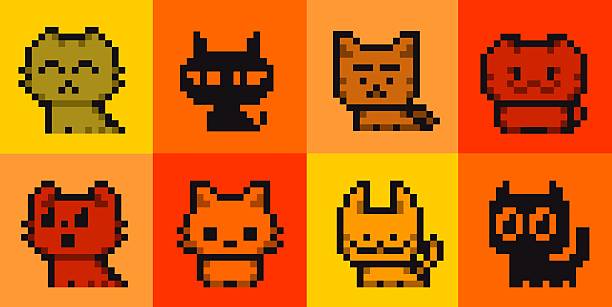
The Peak: Profile Pictures, Celebrity Endorsements, and the BAYC Era (2021)
April 2021
Bored Ape Yacht Club: The Collection That Took Over 2021
0.08 ETH mint price · Floor price reached 100+ ETH · $4 billion peak valuation
Yuga Labs launched Bored Ape Yacht Club in April 2021. The collection consisted of 10,000 algorithmically generated cartoon apes, each with different traits and rarity levels. The mint price was 0.08 ETH, or about $190 at launch. The collection sold out in 12 hours.
Within months, the floor price, meaning the minimum price for any Bored Ape on the secondary market, had climbed above 40 ETH. At the peak of the 2021–2022 bull market, the floor exceeded 100 ETH.
BAYC’s main innovation was not the art. It was the community model. Holders received commercial rights to their ape’s image, invitations to exclusive events, and membership in what Yuga Labs presented as an exclusive club. The idea was that the club’s prestige would grow with the collection.
BAYC Goes Mainstream
Bored Ape Yacht Club gained wide attention in 2021 and became one of the best-known collections in the NFT market. Celebrity endorsements soon followed. Paris Hilton, Steph Curry, Jimmy Fallon, Snoop Dogg, Justin Bieber, Eminem, Gwyneth Paltrow, and dozens of other prominent figures publicly displayed BAYC NFTs as their social media profile pictures. Each endorsement brought more media coverage and new buyer demand.
The ApeCoin token launched in March 2022. BAYC holders received APE tokens as a governance token for the broader Yuga Labs ecosystem. The distribution became one of the largest token airdrops in NFT history, generating hundreds of millions in value for holders who had bought apes months earlier.
In April 2022, Otherside, Yuga Labs’ virtual world, sold land plots as NFTs. The sale raised approximately $285 million in a single afternoon. The demand briefly pushed Ethereum gas prices to levels that made many other transactions prohibitively expensive.

The 2021 NFT Market
The boom extended well beyond BAYC. NFT sales were estimated to reach $25 billion in 2021. Every major category of creative work found an NFT equivalent, including digital art, music, photography, video, domain names, virtual real estate, sports collectibles, and gaming items.
Major brands such as Nike, Adidas, Gucci, Louis Vuitton, McDonald’s, and Coca-Cola launched NFT collections. Sports leagues, including the NBA, NFL, MLB, and MLS, licensed their content for NFT products. At the same time, a generation of digital artists who had struggled to monetize their work through traditional channels gained direct access to collectors willing to pay for digital ownership.
As documented in our bull run psychology research, the NFT boom was one of the strongest signs of the late-stage market optimism that appeared near Bitcoin market peaks. The same forces that pushed retail investors toward risky assets also drove money into NFT collections with no artistic merit, no community, and no utility. In many cases, attention and rising prices were enough to attract buyers.
The timing was telling. NFT collections were dominating cultural conversation near the end of the bull market. Bitcoin reached its all-time high in November 2021, almost exactly when the NFT market reached its cultural saturation peak.
$25B
Estimated NFT sales in 2021, the peak year
OpenSea alone processed $23 billion in 2021. By comparison, OpenSea volume in 2026 was $2.5 billion, down approximately 89%. That gap shows the scale of the market’s collapse more clearly than almost any other single number. However, the remaining volume in 2026 comes from different activities. Utility, ticketing, and blue-chip trading now account for a larger share, rather than mass participation in thousands of collections driven by rising prices.

The Collapse: What Happened and Why (2022–2023)
The NFT market fell faster and further than most participants had imagined during the 2021 peak. By the end of 2022, trading volumes had fallen more than 90% from their highs. By 2023, 95% of NFTs had reached zero value. Collections that had sold for hundreds of thousands of dollars were later offered for the cost of their gas fees. Even then, they found no buyers.
Several forces drove the collapse at the same time. That combination explains why the decline was so severe.
The Buyer Cycle Broke Down
The economics of many NFT collections depended on a steady flow of new buyers. A collection that sold out at 0.08 ETH generated returns for its original buyers only if later buyers were willing to pay more on the secondary market. Those buyers, in turn, needed even later buyers willing to pay still more. Most 2021-era NFT collections had no other way to generate returns beyond finding another buyer willing to pay a higher price.
When the broader crypto market declined in 2022, that cycle broke. Bitcoin fell from $69,000 to $15,500 over twelve months. As a result, the pool of potential NFT buyers contracted sharply. People who might have bought a new collection at a high price in November 2021 were instead dealing with losses from the bear market by early 2022.
New money stopped flowing into the market. Projects that relied on a steady stream of new buyers could no longer maintain their prices. Prices fell, and holders who saw those declines became sellers. As sellers outnumbered the remaining buyers, the cycle reversed almost as quickly as it had formed.
Most Collections Had No Utility
The vast majority of 2021-era NFT collections offered buyers two main things: a unique digital image and membership in a community of holders. Neither is worthless. Unique digital art can have value, and communities can have value. However, neither was enough to support the prices created by the 2021 market once buyer demand fell.
A Bored Ape purchased for 100 ETH as a status symbol in 2021 lost most of its dollar value when ETH declined and the wider collector market contracted. The ape remained unique. The community remained. Neither one, however, generated enough buyer demand to support the prices reached during the 2021 boom.
Wash Trading and Market Manipulation
As documented in our crypto scams research, the NFT market also attracted wash trading. These were transactions between wallets controlled by the same entity, designed to create the appearance of demand and rising prices.
Academic researchers found that wash trading may have accounted for a large share of reported NFT volume during the 2021–2022 peak. Once that activity stopped, the artificial volume disappeared. The broader market was already declining, so the loss of this activity made trading conditions look even weaker than the fall in genuine demand alone would have produced.
The Royalty Wars
NFTs were designed to let creators earn royalties on secondary sales. This offered a major difference from traditional art markets, where artists generally receive nothing from later transactions. A smart contract could set a royalty percentage and direct that payment to the original creator whenever the NFT was resold.
For a period, the system worked. OpenSea and other marketplaces enforced royalties, and creators received meaningful revenue from secondary sales. However, that system came under pressure in 2022 and 2023. Marketplaces including Blur and X2Y2 began offering zero-royalty trading to attract more volume.
The resulting royalty wars hurt the wider NFT market. Creators lost secondary revenue, which made new project launches less attractive financially. Collectors who had bought projects partly because royalty income would fund future development also saw that funding decline. As royalty enforcement weakened, NFTs became less attractive as a way for creators to earn ongoing income than they had appeared during the 2021 peak.

What Survived: The Blue Chips and the Survivors
The 95% worthless figure needs context. It refers to the large majority of NFT collections launched during the 2021 boom that had no lasting community, established artist reputation, useful features, or other reason to retain value once buyer demand fell. It does not describe the entire NFT market. Collections with a stronger base of cultural, artistic, or practical value held on to more of their value.
CryptoPunks, the original and most historically important NFT collection, retained multi-million-dollar floor prices through the bear market. The Punk with alien traits still commanded prices in the tens of millions. Its place as the first generative NFT collection with a fully developed collector community gave it cultural and historical value that did not depend entirely on rising prices.
Pudgy Penguins became a notable example of a successful recovery. After a difficult start, new leadership focused the project on brand development and long-term growth. The collection had also gone through an internal crisis. Its founders were removed by the community following concerns about project management. In April 2022, Luca Netz acquired Pudgy Penguins for approximately $2.5 million.
Under Netz’s leadership, the project moved into physical toy licensing, children’s entertainment, and brand development. Pudgy Penguin plush toys were sold in more than 3,000 Walmart stores. The combination of physical product distribution and community rebuilding produced one of the strongest NFT recovery stories of the bear market.
Art Blocks took a different path. The generative art platform allows artists to program algorithms that produce unique outputs for each mint. It maintained collector interest through the bear market because its work was treated as art rather than as a vehicle for price gains.
Fidenza by Tyler Hobbs and Ringers by Dmitri Cherniak retained value as recognized works within a digital art collecting community that existed before the NFT boom and continued after the market downturn.

The Transformation: Utility in 2024–2026
The NFT market followed the classic technology hype cycle closely. Innovation trigger (2017–2020): CryptoPunks, CryptoKitties, and ERC-721 introduced the main building blocks. Peak of inflated expectations (2021): $17 billion in volume, celebrity endorsements, and “$69 million JPEG” headlines. Trough of disillusionment (2022–2023): 95% of NFTs reached zero value. Slope of enlightenment (2024–2025): Blue chips held value, enterprise adoption grew, and practical uses emerged. Plateau of productivity (2026): NFTs became infrastructure for ticketing, identity, loyalty, and provenance instead of vehicles for high-priced digital art trading.
The NFT market in 2026 looks very different from the 2021 market, even though some features are still present. NFT ticketing captured 5.3% of major US venue ticket sales in 2026. By early 2026, active NFT participation had grown 80% year over year.
More Users, Lower Transaction Values
The combination of 80% participation growth and an 89% decline in volume from the 2021 peak is the most revealing measure of how the category has changed. More people are using NFTs, but they are using them for lower-value transactions tied to real services and benefits. The market has moved away from a small number of high-value trades and toward everyday uses.
NFT Ticketing
Event ticketing is the most commercially successful NFT use case to emerge after the 2021 boom. NFT tickets address three problems with traditional ticketing. First, counterfeiting becomes harder because the blockchain record can verify authenticity. Second, smart contracts can set rules for resale prices or recipient eligibility, which can limit scalping. Third, the ticket NFT can give holders additional benefits before, during, and after an event.
In 2026, NFT ticketing accounted for 5.3% of major US venue ticket sales. That represents millions of transactions, with each one providing a practical use for the technology.

NFT Loyalty and Membership
Brands have also found commercial value in using NFTs for loyalty programs and memberships. An NFT-based membership can be verified on-chain without relying on the brand’s own database. It can also move between wallets, which allows a secondary market for premium memberships. In addition, smart contracts can enforce access to specific benefits without requiring the brand to check eligibility manually.
Starbucks Odyssey, launched in 2022, was one of the first major brand loyalty programs built on NFT infrastructure. Since then, the model has spread across retail, hospitality, and entertainment.
Digital Art With Genuine Markets
The digital art trading market has contracted sharply. OpenSea’s daily volumes fell to around $5 million from $2.7 billion at the 2021 peak. However, digital art collectors are still active. The market was not destroyed by the downturn. Instead, the earlier surge had made it harder to distinguish long-term collectors from short-term buyers.
Artists who built genuine collector relationships during 2021 and whose work continues to have artistic value still sell through platforms including SuperRare, Foundation, and the redesigned OpenSea. The market is smaller. It is also more focused on collectors who value the work itself.
$5.5B
Total NFT transaction volume in 2025, down 37% from 2024
+80%
Growth in active NFT participation, early 2026, year over year

The Financial Record
Any history of NFTs has to address the losses. The 95% worthless figure represents real financial harm to people who bought NFT collections at inflated prices during the 2021–2022 boom and were left holding tokens with no market value after prices collapsed. Many were retail buyers with limited investment experience. They were drawn by the promise of easy gains and celebrity endorsements. As a result, they carried losses that early minters, insiders, and early sellers had already avoided.
The forces behind those losses appear in every market bubble. Early participants with low cost bases sell to later buyers who enter at higher prices. Gains therefore tend to concentrate among early entrants, while losses fall more heavily on those who buy near the peak. NFTs were not unique in this regard. They followed a pattern that dates back to events such as the tulip mania of 1637.
There is, however, an important difference between NFTs and a traditional bubble in commodities or equities. The technology behind NFTs has clear uses that are now being deployed. In 2026, active NFT participation grew 80%, driven by ticketing and membership. That growth shows that the technology is being used for purposes beyond the high-value trading that dominated the 2021 market.
None of this offsets the people who lost money during the boom. It does, however, point to a different role for the technology. NFTs can serve as infrastructure for ticketing, membership, identity, and provenance without depending on the high prices and trading activity that characterized the 2021 market.

The Next Test
By mid-2026, the NFT market looks very different from the 2021 market. Trading activity has fallen sharply, while ticketing and membership have grown. The main question now is whether these uses can support a market without another bull market bringing buyers back.
NFT ticketing provides the clearest number to track. Major US venues accounted for 5.3% of NFT ticket sales in 2026. If that share reaches 10%, 20%, or higher over the next two years, blockchain-based verification and smart contract resale rules could reshape a $30+ billion industry. At that scale, NFT ticketing would rank among the largest real-world blockchain applications in the technology’s history.
The next bull market will provide another test. It could bring another surge in NFT buying and pull attention away from ticketing, membership, and other uses. It could also show that buyers have changed since 2021–2022 and are placing more value on products with clear uses. The technology adoption cycle points toward wider use after a major market downturn. The next market cycle will show whether NFTs have reached that stage or whether high-price NFT trading returns again.
CryptoPunks were given away for free in 2017. One sold for $23.7 million in 2022. A collection that began as a test of digital ownership became the highest-value NFT collection in history, survived the market collapse, and continues to trade as part of crypto’s cultural and historical record.
The technology behind CryptoPunks is now being used for event tickets at Walmart and loyalty programs at major consumer brands. The journey from a free digital Punk to infrastructure for real-world asset ownership is one of the most important stories in crypto’s history.

What This Article Covers
The NFT market followed the classic technology hype cycle. The 2021 peak brought inflated expectations. The 2022–2023 downturn brought widespread losses and a sharp drop in activity. From 2024 through 2026, ticketing, membership, identity, and other uses gave NFTs a role beyond high-priced digital art trading.
CryptoPunks launched in June 2017 and were given away for free. All 10,000 were claimed within hours. They became the most historically important NFT collection, with individual pieces later selling for tens of millions. The ERC-721 standard was finalized in June 2018 and gave developers a shared system for creating and trading unique tokens across wallets, marketplaces, and applications.
CryptoKitties tested Ethereum’s limits in November 2017. The game congested the Ethereum network and showed both Ethereum’s scalability problem and NFTs’ ability to attract a broad audience. NBA Top Shot, launched in 2020, later showed that NFTs could reach people outside crypto through licensed sports content on the Flow blockchain.
Beeple’s $69.3 million Christie’s sale in March 2021 brought NFTs into mainstream media. The sale preceded the fastest expansion of an asset category in financial history. Estimated NFT sales reached $25 billion in 2021, while OpenSea recorded $2.7 billion in trading volume in a single day. Celebrity endorsements also introduced NFTs to audiences who had never used or heard of Ethereum.
By 2023, 95% of NFTs had reached zero value. Several forces drove the collapse at the same time. Buyer demand ran out. Most collections depended on a steady supply of new buyers. Wash trading had inflated reported activity. Royalty disputes reduced income for creators. At the same time, the broader crypto bear market reduced the number of buyers able to enter the NFT market.
Some collections held value because they had stronger reasons for people to keep buying and collecting them. CryptoPunks had historical importance. Bored Ape Yacht Club built value through brand development and token airdrops. Pudgy Penguins expanded through physical product licensing. Art Blocks retained collector interest through its focus on digital art.
By 2026, active NFT participation had grown 80% year over year. The growth came through uses such as ticketing and membership. NFT ticketing accounted for 5.3% of major US venue ticket sales. Total NFT transaction volume reached $5.5 billion in 2025, down 37% from 2024. The activity was also different from the 2021 market, with more use tied to services and digital ownership.
Sources & Further Reading
- What Happened to NFTs? The Full Timeline From Boom to Bust to Now — NFTdroops, May 2026
- What Happened to NFTs? The Crash, Survivors and 2026 Market — Webopedia, May 2026
- The Evolution of NFTs: From PFPs in 2021 to Nodes and Memberships in 2025 — Lunar Strategy
- A Brief History of NFTs: From CryptoPunks to Bored Apes — The Block
- First NFT Ever to 2023 and Beyond: A Complete NFT Timeline — NFT Evening
- NFT Timeline: The Beginnings and History of NFTs — NFT Now
- The Rise and Fall of NFTs: A Timeline — The Smart Money Show
- OpenSea — NFT Marketplace
- CryptoPunks — Larva Labs
- Bored Ape Yacht Club — Yuga Labs